An Airbnb elopement offers space for slow mornings, shared meals, and meaningful time together. It can also come with logistical layers couples don’t always see at first. This guide explores what makes it work beautifully — and what to consider before you book.
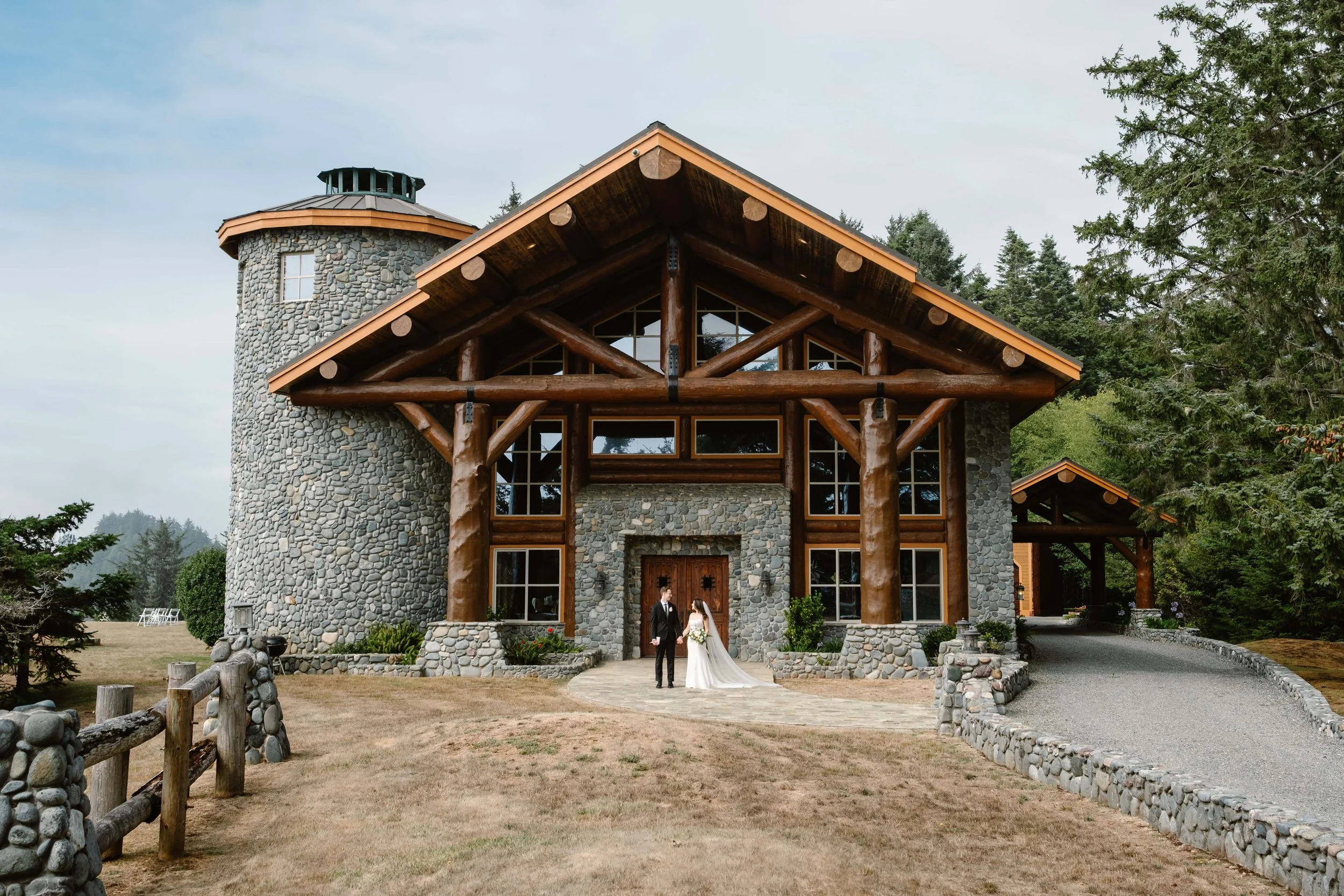
Why an Airbnb Elopement Isn’t Always as Simple as It Sounds
It makes sense why so many couples start their search with an Airbnb.
There’s something appealing about having a space that feels like home for a few days. A place where you can wake up slowly, make coffee in your own kitchen, spend the morning getting ready together, and come back after your ceremony to soak in a hot tub or cook dinner (together or with the people you love). It offers a certain level of flexibility and intimacy that many traditional venues don’t. That’s where the appeal of an Airbnb elopement really begins to make sense.
Over the years, I’ve seen couples use Airbnbs in a few different ways. Some choose one as the full setting for a two-person elopement. Others use it as a basecamp while they get married on public land and gather afterward for dinner. And some try to host their entire wedding day there with a small group of guests.
Each of those approaches can work. They also come with very different logistics.
What often surprises couples is the logistical layers underneath it all…
Platform policies, vendor restrictions, guest limitations, parking, noise ordinances etc.. These all add up and become the difference between staying somewhere and hosting an event. None of it is impossible to navigate, but it does require clarity before you book.
This guide is here to give you that clarity.
If you’re considering using an Airbnb for your elopement or intimate wedding, here’s how to think through it thoughtfully — and how to set it up in a way that protects your experience.
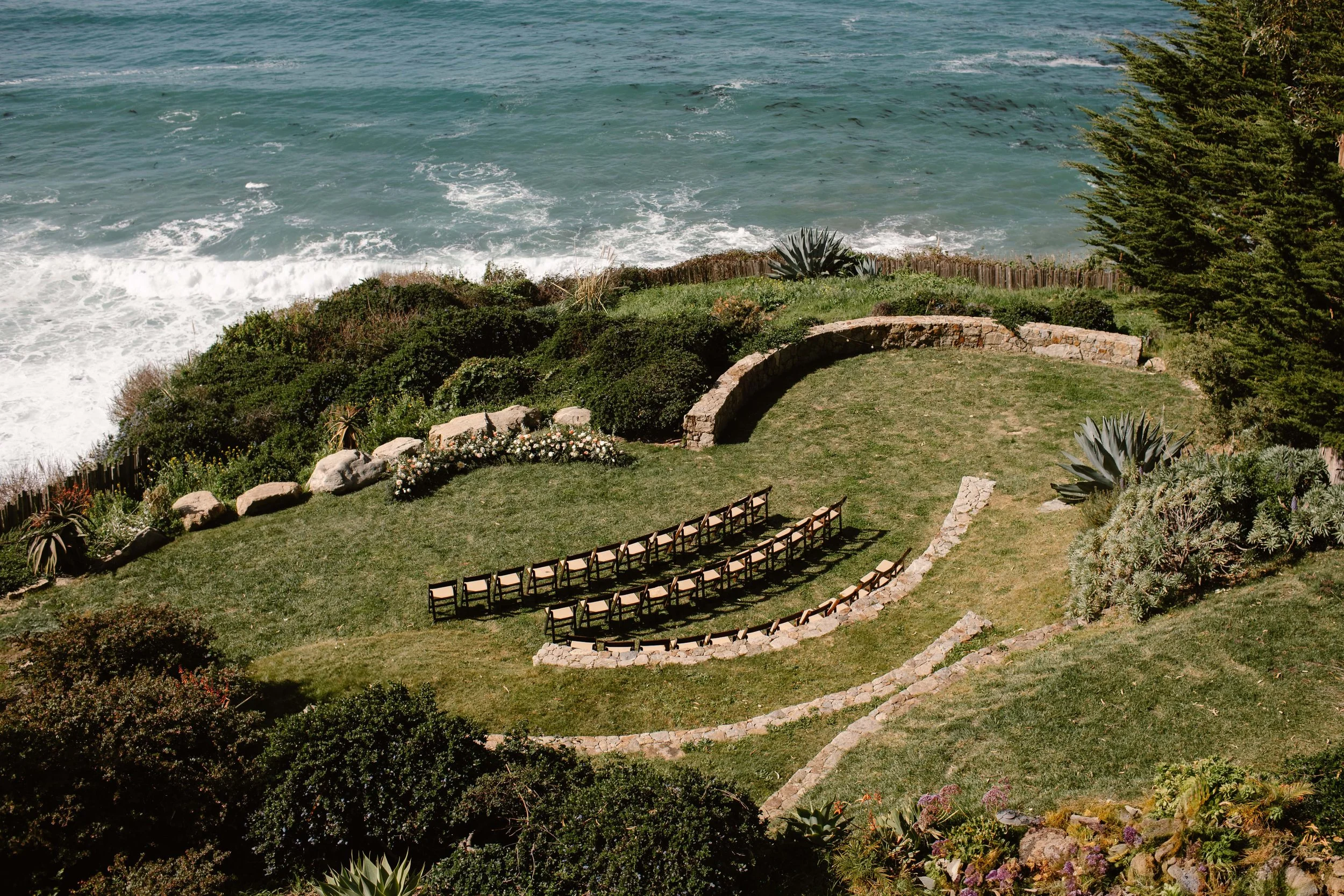
The airbnb elopement reality check
One of the most important shifts to understand is this: there’s a difference between staying somewhere and hosting an event.
Booking a home for a weekend getaway with the two of you is very different from inviting guests, bringing in vendors, setting up ceremony chairs, or having dinner prepared onsite. At a certain point, the experience moves from “lodging” into “event” territory — even if it still feels intimate and low-key to you.
As of 2020, Airbnb’s platform-wide policy prohibits events at listings, regardless of size. Individual hosts may have additional rules around guests, photography, vendor access, parking, or amplified music. Even if a property sleeps ten, that doesn’t automatically mean ten people can gather there during the day. In many cases, vendors are counted as guests. Some listings also have strict no-photography policies written into their house rules.
None of this is meant to discourage the idea, however its important to know in order to approach it properly.
I’ve seen couples assume that because their group feels small, it won’t register as an event. But once cars line the driveway, hair and makeup teams arrive, catering is delivered, and music starts playing, the dynamic changes. And then neighbors notice, hosts often have cameras and pay attention. That’s when policies really come into play.
Before you fall in love with a listing, it’s worth pausing and running through a few practical questions.
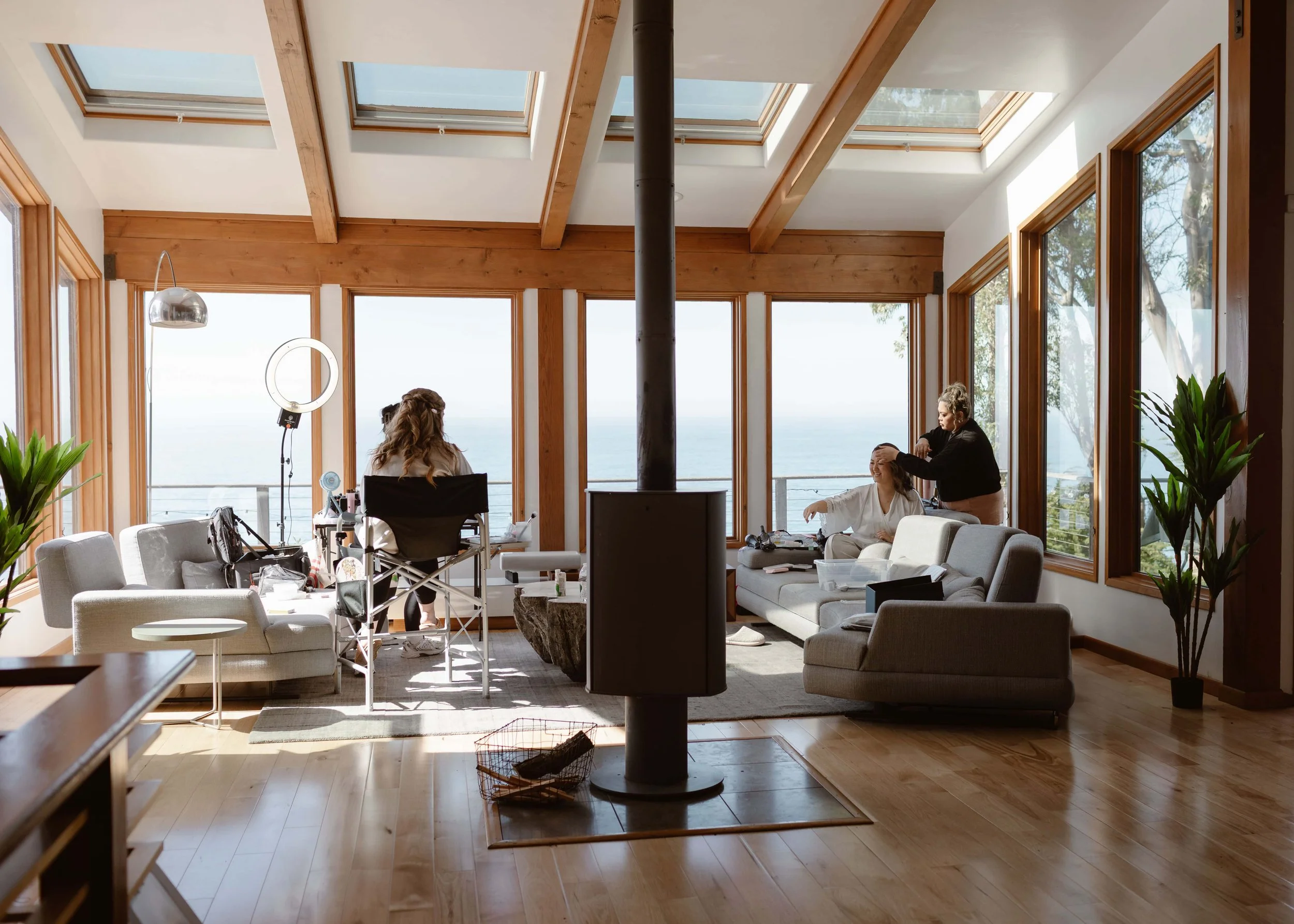
A checklist before you book your airbnb elopement
Before you book anything, or send a deposit, walk through these questions carefully. Couples often choose a property because it looks beautiful in photos, but how a space photographs and how it functions aren’t always the same thing. A dark, cozy cabin might feel romantic online but offer limited natural light for getting ready. An open modern home might look stunning but lack privacy between shared spaces. The aesthetic matters — but it needs to support the structure of the day.
PLATFORM & PERMISSION
Does the listing explicitly allow events?
Have you clearly communicated your plans to the host — including guest count and vendor presence?
Are vendors considered additional guests under the property rules?
Is there a written agreement outlining what is and isn’t allowed?
What is the cancellation policy, and what protections exist if the host cancels?
GUEST & VENDOR LOGISTICS
How many people can realistically be on the property at one time — not just sleep there?
Is there adequate parking for guests and vendors?
Are there neighborhood noise ordinances that would affect music or gathering outdoors?
Are amplified speakers allowed?
Are there restrictions on photography or professional equipment?
LAYOUT & EXPERIENCE
Is there enough space for both partners to get ready comfortably?
Are the sleeping arrangements actually configured in a way that works for your group?
How many bathrooms are available?
If you’re hiring a private chef or catering, is the kitchen equipped to support that?
Is there indoor space you’d feel good spending time in if the weather shifts?
Does the natural light in the space support the kind of images you’re hoping for?
Does the overall aesthetic and atmosphere of the property align with the vibe you want your day to have?
PROTECTION & PRACTICALITIES
Is event insurance required — and if not, should you still carry it?
What does the security deposit cover?
Have you read recent reviews carefully, especially around host communication and neighbor interactions?
If something changes unexpectedly, do you have a backup plan?
How long is your stay — allowing buffer days reduces stress, supports proper setup and cleanup, and gives you time to return the property to its original condition.
What are the cleanup expectations, trash removal policies, and furniture reset requirements?
If you're still shaping the overall structure of your day, this in-depth elopement planning guide walks through timelines, flow, and how to build a day that feels intentional.
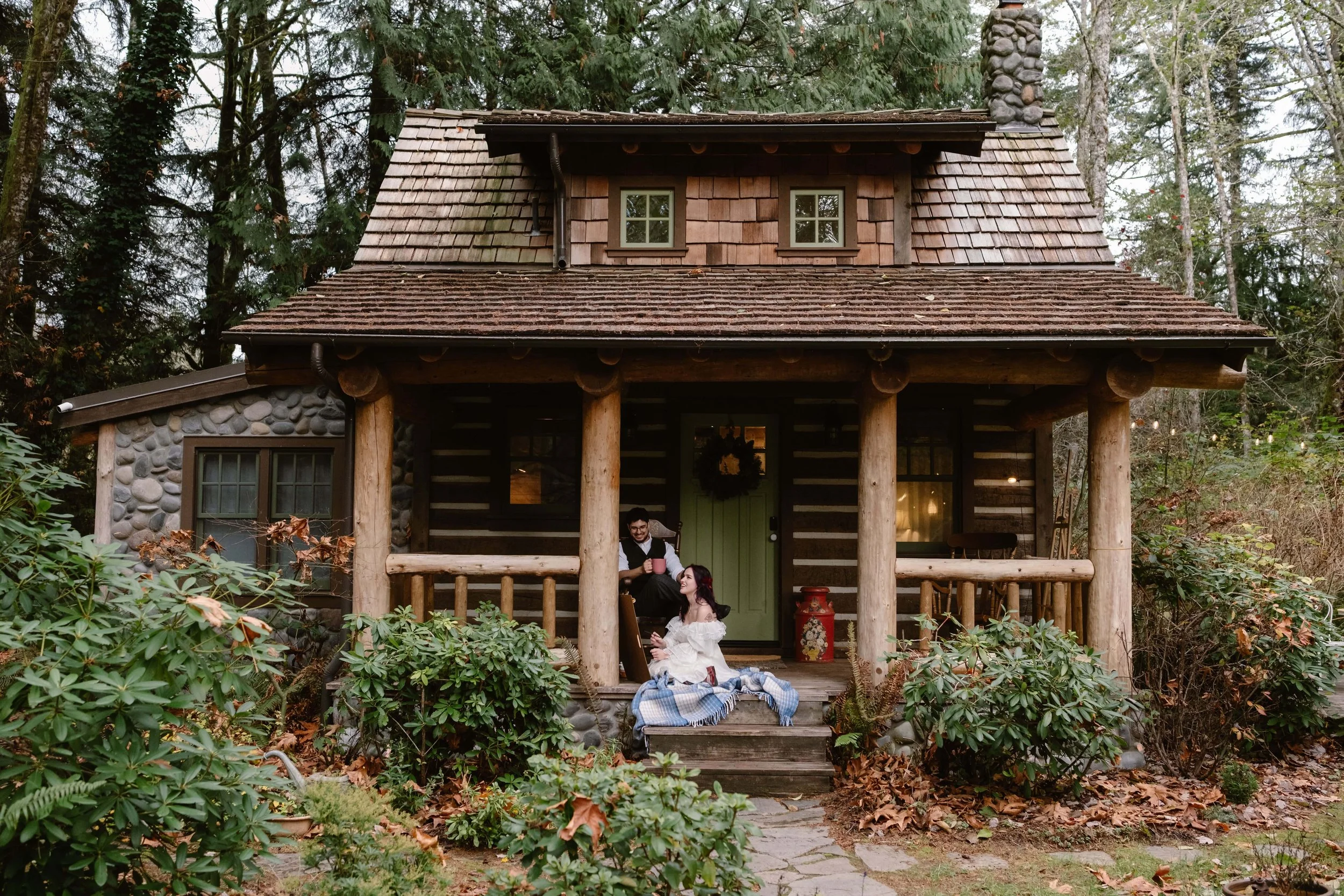
The Three Ways Couples Use an Airbnb for Their Elopement
There are three common ways couples approach this. Each one can work — but the logistics look different depending on what kind of day you’re building. Understanding which category you fall into makes everything else easier.
Airbnb for a Two-Person Elopement
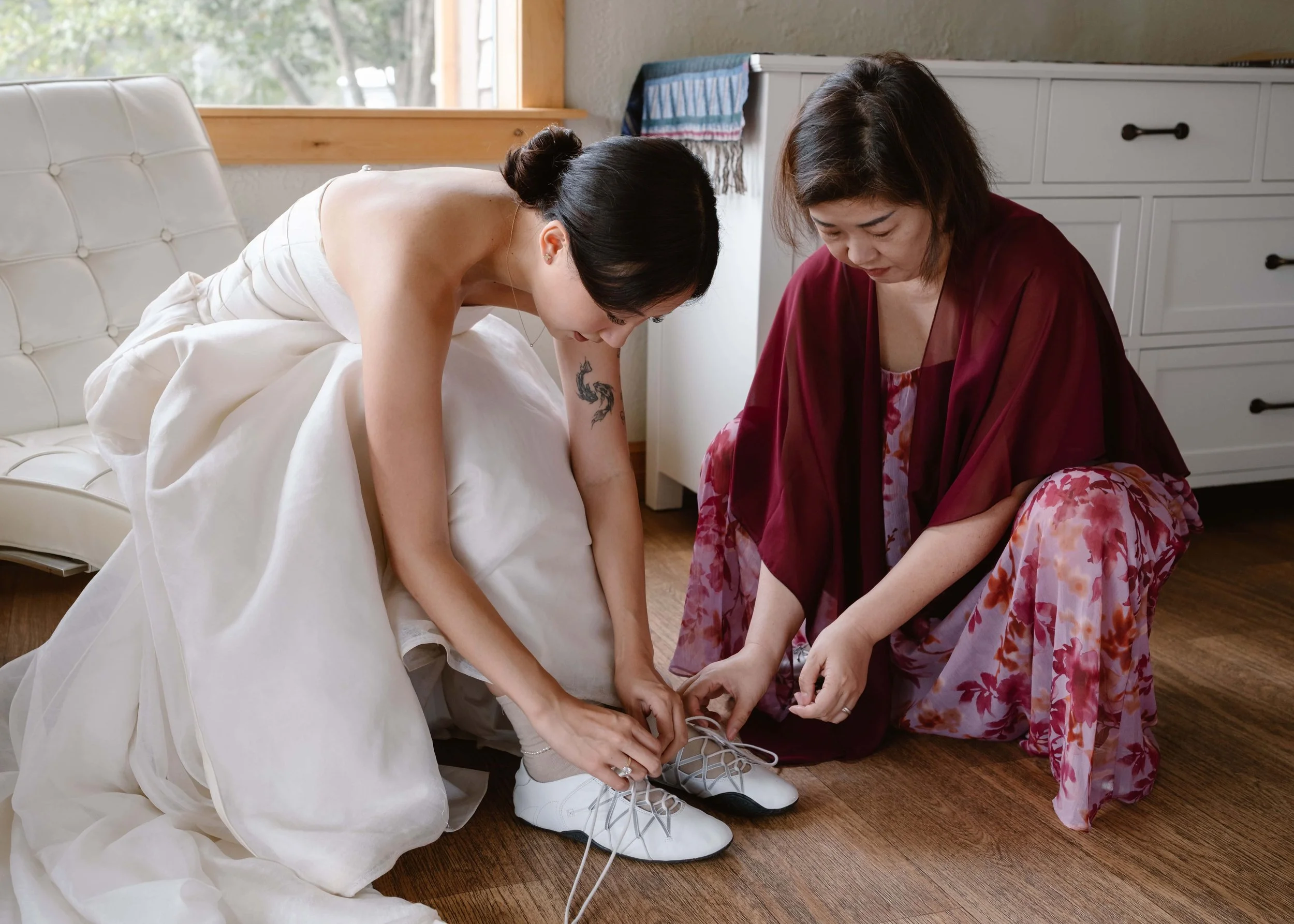
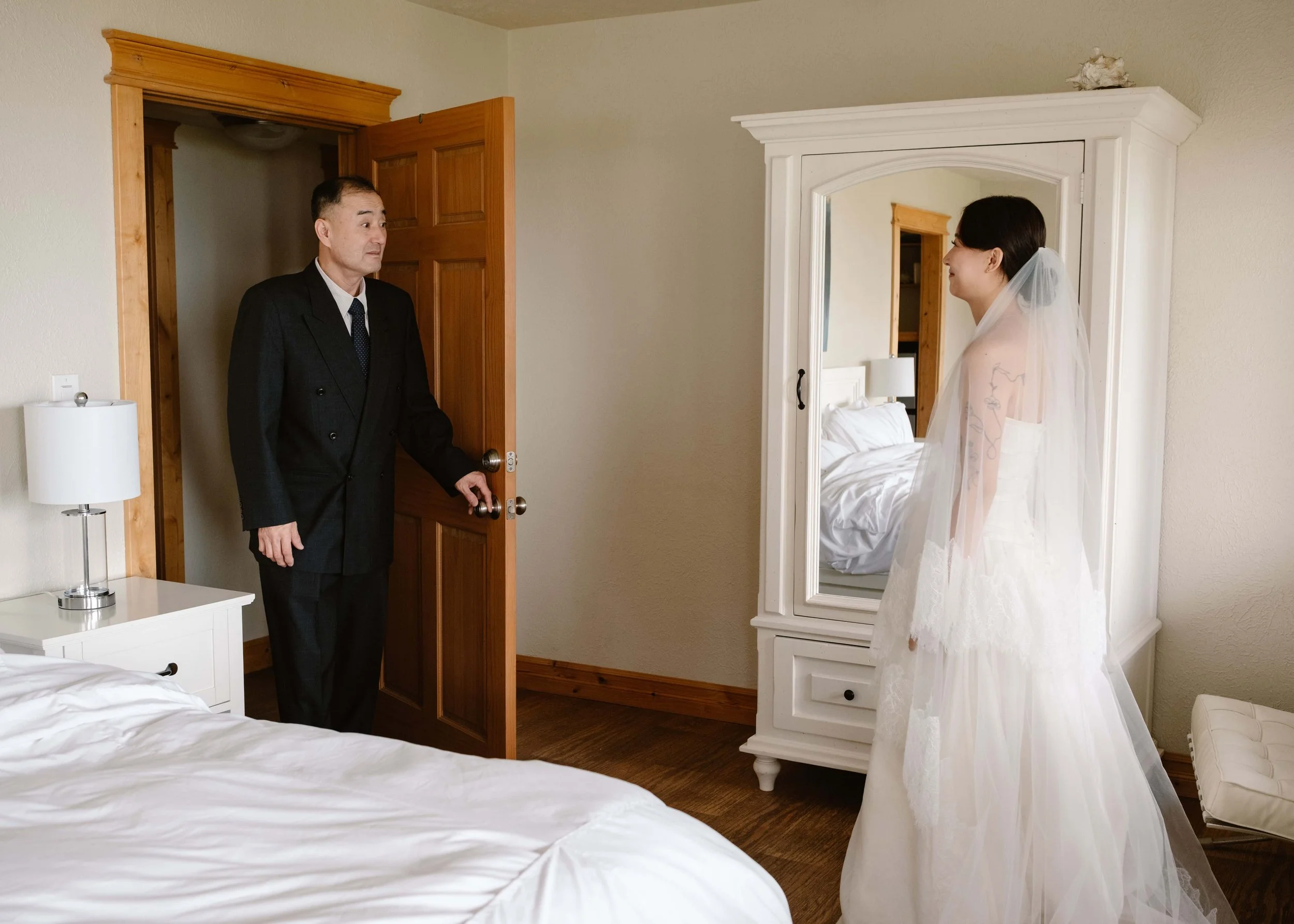
For couples eloping with no guests, an Airbnb is often the top tier choice over something like a hotel room. This is especially so for couples traveling to the area for a few days to a week or more. You have privacy, control over the environment, and not to mention it can set the perfect vibe for your entire stay. You can get ready slowly, share a first look on the deck, step outside for sunset, and return to the same space afterward to unwind.
When it’s truly just the two of you, this option is often the simplest to navigate. There’s no guest parking to manage and no timeline built around other people’s needs. The space becomes part of the experience rather than something you’re working around.
That said, vendors still change the dynamic. Even for a two-person Airbnb elopement, the presence of professional services can shift how a property is classified. Hair and makeup teams, photographers, videographers, private chefs — all of them require access, space, and sometimes equipment. Their presence can quickly violate policies. Some properties count vendors as additional guests. Others restrict professional photography or outside services entirely.
Before booking, confirm that vendors are allowed onsite and that your plans have been clearly communicated. Check the lighting and layout carefully. If the weather shifts, is this somewhere you’d feel good spending more time? Are there comfortable and equitable spaces for both partners to get ready?
When approached thoughtfully, this version can feel immersive and personal.
WHERE LOGISTICS MATTER MOST
Vendor approval and house rules around professional services
Photography restrictions written into listing policies
Early check-in needs for getting ready (preferably 1+ days before your elopement)
Natural light and layout flow
Backup indoor space if weather turns
Airbnb as a Basecamp for Guests
Another common approach is using an Airbnb as a shared home base while hosting your ceremony elsewhere (often on public land). This allows everyone to stay together for the weekend while keeping the actual ceremony in a location designed for gatherings.
When this works well, it feels like a retreat. I’ve seen couples rent large coastal lodges where family members cooked meals together as part of the celebration. In one case, they intentionally booked a property with an oversized kitchen so multiple people could prep food at once. They built that into the timeline, handled much of the prep the day before, and treated the cooking as part of the experience.
The success of this approach comes down to alignment between guest count and layout. Bathroom access, sleeping arrangements, kitchen capacity, parking, and common areas all need to support the flow of the day.
Where it gets complicated is when the number of people onsite exceeds what the property can realistically handle. Even if the ceremony happens elsewhere, gathering afterward, hosting dinner, or coordinating multiple vendors can shift the dynamic quickly.
WHERE LOGISTICS START EXPANDING
Sleeping capacity vs. daytime gathering capacity
Kitchen size and equipment for shared meals or private chefs
Bathroom count and getting-ready flow
Parking overflow and neighborhood visibility
Noise ordinances and vendor arrival timing
Extended stay to allow for set up and clean up
When the space comfortably supports your group, this option can feel deeply connected. When it’s stretched beyond its intended use, stress tends to follow.
Using an Airbnb as a Venue Replacement
The third scenario is using an Airbnb as the primary location for your entire wedding day — ceremony, gathering, dinner, and celebration all in one place.
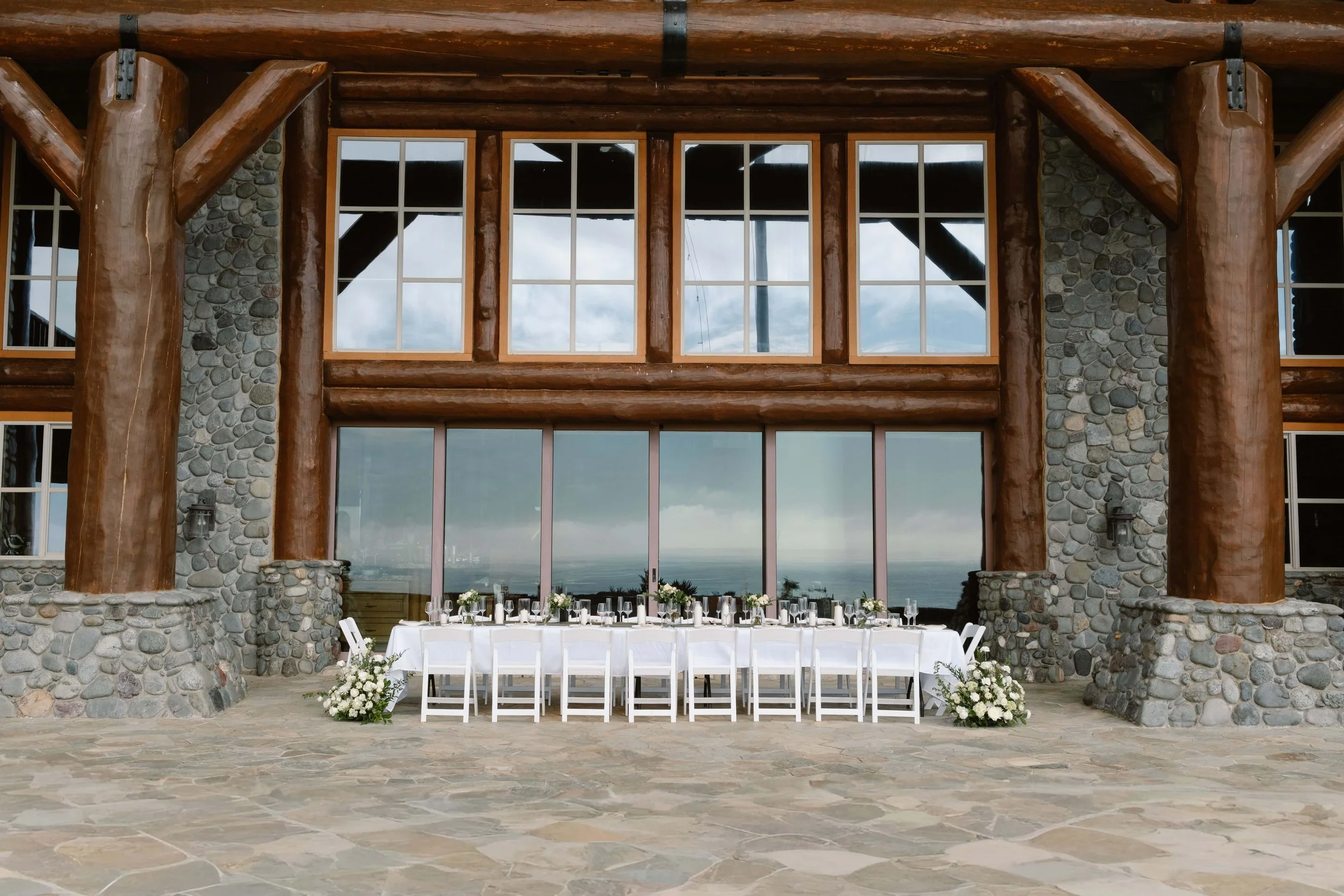
This is where clarity matters most. As guest lists grow, the logistics begin to resemble a small wedding. Rentals may be required. Catering teams arrive with equipment. Multiple vendors need setup time. Parking extends beyond the driveway. Even if the group feels intimate, the property is functioning as an event space.
When you bring in everything a venue normally includes — tables, chairs, staff oversight, parking management, insurance coverage, coordination — the overall cost can approach or match a small venue rental. Venues are priced the way they are because that infrastructure already exists.
Some properties are structured for this and explicitly allow events, often operating as hybrid lodging-venue spaces outside of Airbnb’s platform. When booked directly through a management company with a contract and insurance requirements in place, these can work well.
Many standard short-term rentals, however, are not designed for that level of hosting. Once your guest list moves beyond immediate family and a handful of close friends, it’s worth evaluating whether a licensed venue might better support the experience you’re trying to create. Venues provide defined capacity limits, parking infrastructure, clear contracts, insurance structure, and often day-of coordination. If the communal lodging aspect is important to you, there are venues throughout the Pacific Northwest that offer onsite accommodations while still being equipped for gatherings.
Using an Airbnb this way isn’t inherently wrong. It simply requires treating it like the event space it becomes.
WHERE IT BEGINS TO FUNCTION LIKE A VENUE:
Guest count extending beyond overnight capacity
Rental needs (tables, chairs, tents, heaters)
Catering load-in and vendor coordination
Parking beyond what the property supports
Insurance requirements and formal contracts
Airbnb, VRBO, and Direct Booking: What’s Different?
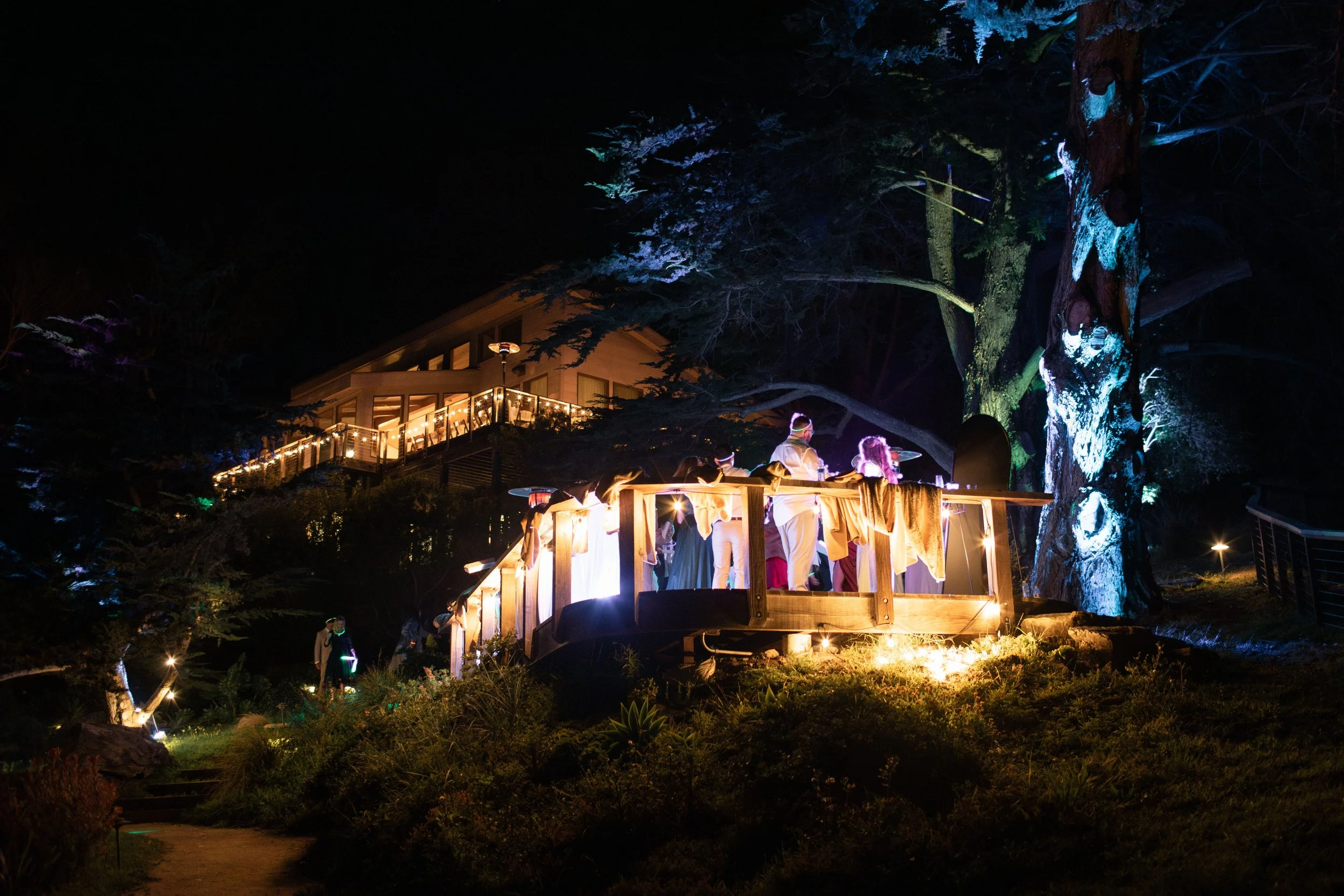
Not all short-term rentals operate the same way, and the platform you book through can change your level of protection.
As mentioned earlier, Airbnb has maintained a platform-wide no-event policy since 2020. Even if a host seems flexible in conversation, the listing itself is still governed by Airbnb’s terms. If a property is reported for hosting an event that violates policy, Airbnb has the ability to cancel the reservation — sometimes with little notice.
VRBO does not have a blanket no-event policy in the same way, and it includes a search filter for properties that allow events. That said, individual listings still set their own rules. Just because a platform permits events doesn’t mean every property does. Always confirm directly with the host and ensure expectations are clearly documented.
Some properties advertise on Airbnb while also operating independently through a private website or management company. In those cases, booking directly can sometimes allow for more flexibility, especially if the property is structured to host gatherings. If you go this route, make sure there is a formal contract outlining usage, guest count, vendor presence, insurance requirements, and cancellation terms. Never send funds without written agreement and clear documentation.
It’s also important to understand that short-term rentals can cancel reservations under certain conditions. While rare, it does happen — especially if policies are unclear or expectations weren’t fully aligned. Licensed venues typically have stricter contractual obligations, which can provide more stability for larger gatherings.
If your plans involve guests, vendors, rentals, or structured timelines, having clarity on platform policies and contractual protections is part of protecting your day.


When It Works Beautifully
Airbnbs can create incredibly meaningful wedding days.
I’ve seen couples spend the morning cooking breakfast together before heading out for a private ceremony. I’ve seen families gather around oversized kitchen islands, chopping vegetables and laughing while the day unfolded slowly around them. I’ve seen couples return after sunset to light a fire, pour a glass of wine, and sit quietly on the deck as the weight of the day settled in.
What did all of those experiences have in common? Intention.
The guest count aligned with the layout. The host understood how the space would be used. Vendors were accounted for. Parking was planned. The kitchen could actually support the meal they envisioned. The timeline made room for the moments that mattered instead of compressing everything into a space that wasn’t designed for it.
When an Airbnb fits the size and structure of the gathering, it can feel immersive and deeply personal. When it’s stretched beyond that, the friction tends to show up in small ways that add unnecessary stress.
The difference isn’t whether an Airbnb is “allowed.”
It’s whether the space truly supports the experience you’re trying to create.
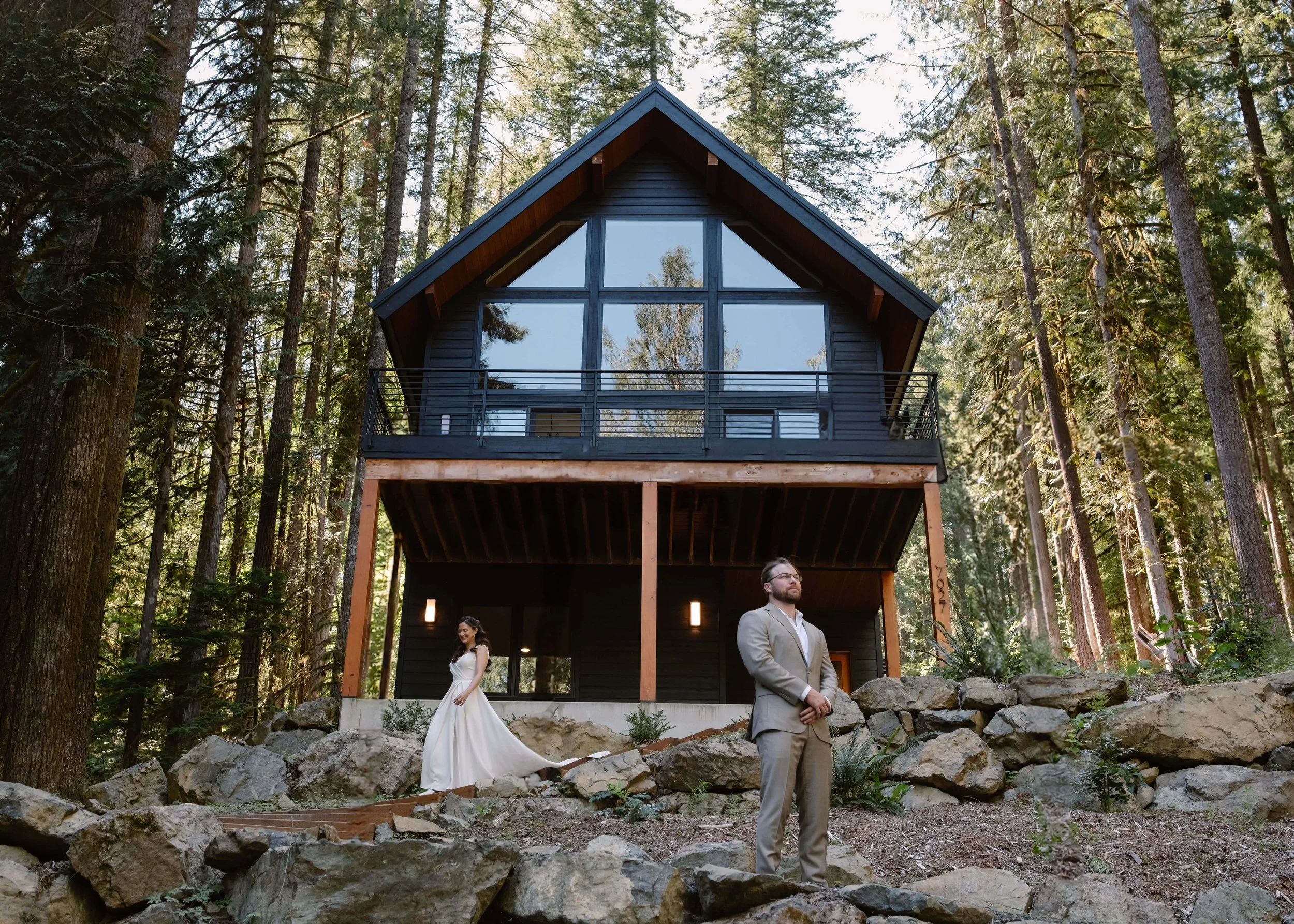
Airbnb Elopement FAQs: Common Questions Answered
Are Airbnb elopements allowed?
Airbnb maintains a platform-wide no-event policy, and individual hosts may have additional restrictions around guests and vendors. Whether an Airbnb elopement is allowed depends on how the property is classified and how it will be used. Some rentals — particularly those booked through private management companies or platforms like VRBO — may explicitly allow gatherings, but written permission and clear expectations are essential.
What’s the difference between an Airbnb elopement and an Airbnb wedding?
An Airbnb elopement typically involves very few guests and minimal setup, while an Airbnb wedding often includes larger guest counts, rentals, catering, and more structured timelines — which can shift the property into functioning like a venue.
Is an Airbnb elopement cheaper than a venue?
An Airbnb rental may appear less expensive upfront, but once you add rentals, catering, insurance, coordination, and setup/cleanup logistics, the total cost can approach that of a small venue. Venues include infrastructure that short-term rentals typically do not.
Can Airbnb cancel an elopement booking?
Yes. If a booking violates platform policy or host rules, Airbnb can cancel reservations under certain circumstances.
How many guests can you have at an Airbnb elopement?
Guest limits vary by property and are not always the same as sleeping capacity. Vendors may also count toward guest totals.
Do you need event insurance for an Airbnb elopement?
Some properties require it, others don’t — but carrying event insurance can protect you in case of property damage, vendor mishaps, or unexpected issues.
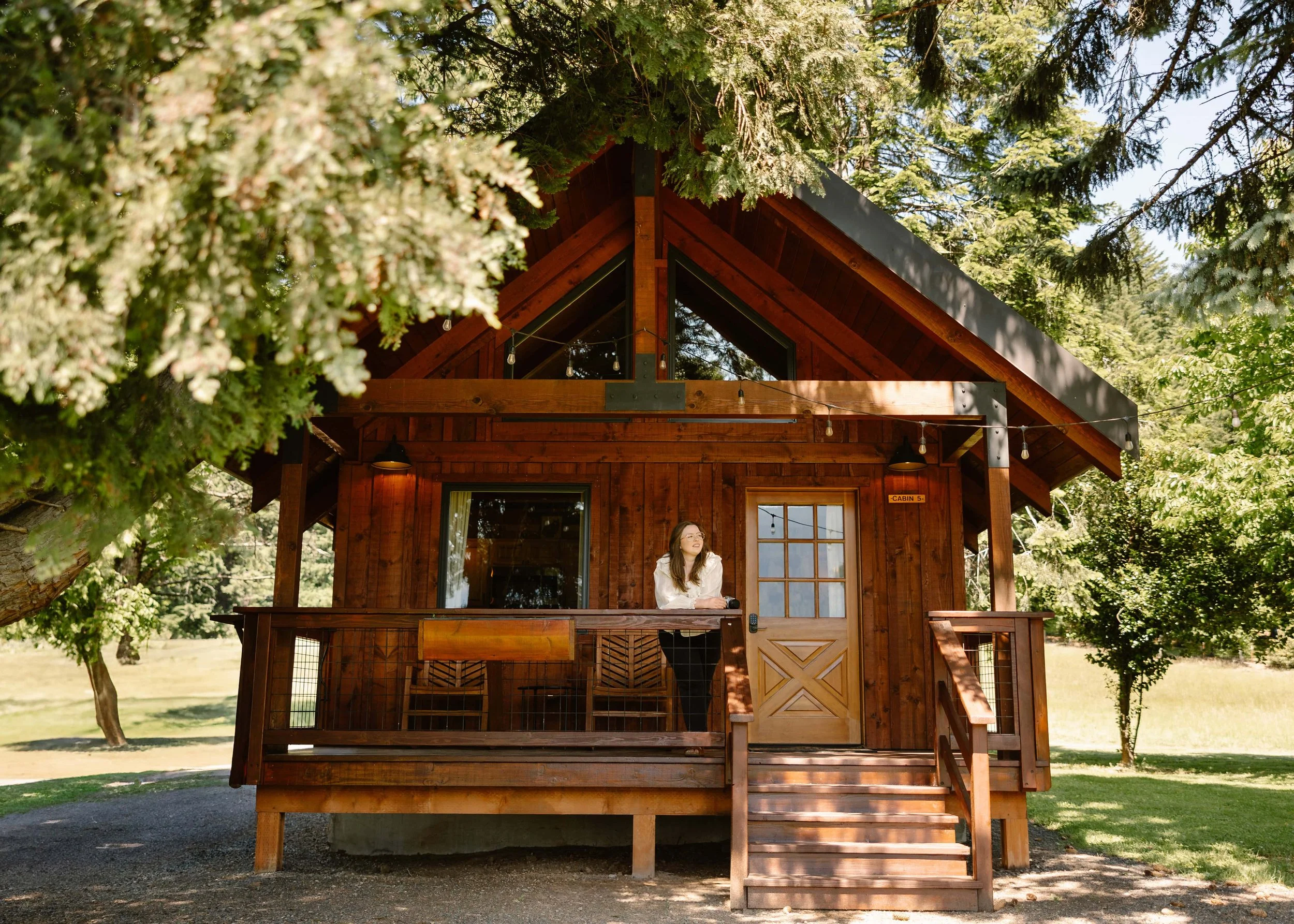
Hi, I’m Heather
AND I’M AN ELOPEMENT PHOTOGRAPHER HELPING COUPLES BUILD DAYS THAT ACTUALLY WORK
Airbnb elopements come up in almost every planning conversation I have — usually early on, when couples are trying to decide what kind of experience they actually want. I’ve seen them work beautifully, and I’ve also seen where small assumptions create stress that didn’t need to be there.
If you’re weighing whether an Airbnb is the right fit for your day, this is exactly the kind of thing we’ll talk through together. We’ll look at your guest count, your priorities, the space itself, and what the day needs to feel grounded and smooth. I care a lot more about building a day that actually fits you than forcing it into a trend or a template.
If you’re in the middle of figuring this out, reach out and tell me what you’re thinking. I’ll give you honest feedback and help you sort through what makes sense.
Continue reading more helpful planning resources on the blog below:

An Airbnb elopement offers space for slow mornings, shared meals, and meaningful time together. It can also come with logistical layers couples don’t always see at first. This guide explores what makes it work beautifully — and what to consider before you book.