This guide to wedding venues in the Pacific Northwest is designed for couples planning elopements and micro weddings that feel adventurous, intentional, and guest-conscious.
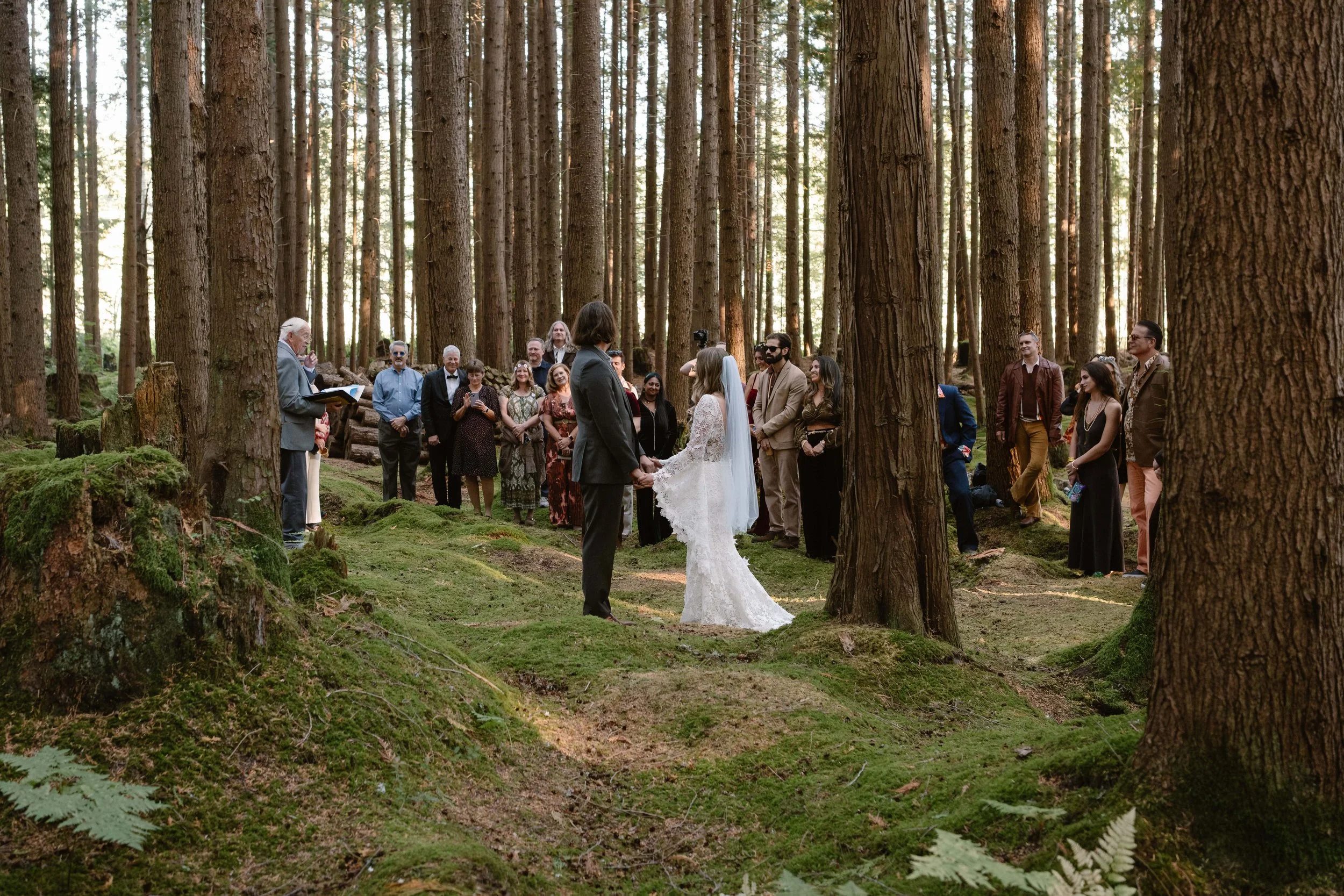
Wedding Venues in the Pacific Northwest That Feel Like A Basecamp for Your Greatest Adventure
If you’ve started searching for wedding venues in the Pacific Northwest, you’ve probably realized quickly that this region does things differently. You won’t find endless suburban banquet halls or interchangeable ballroom spaces. Most venues here are shaped by landscape — mountains, coastline, forest, farmland — and that geography influences everything from guest experience to logistics.
That’s part of the appeal.
But it also means that not every venue works the same way, especially if you’re planning an elopement or micro wedding with guests. Across Washington and Oregon, most venues fall into a few core categories. Understanding those categories makes it much easier to narrow down what actually fits your day.
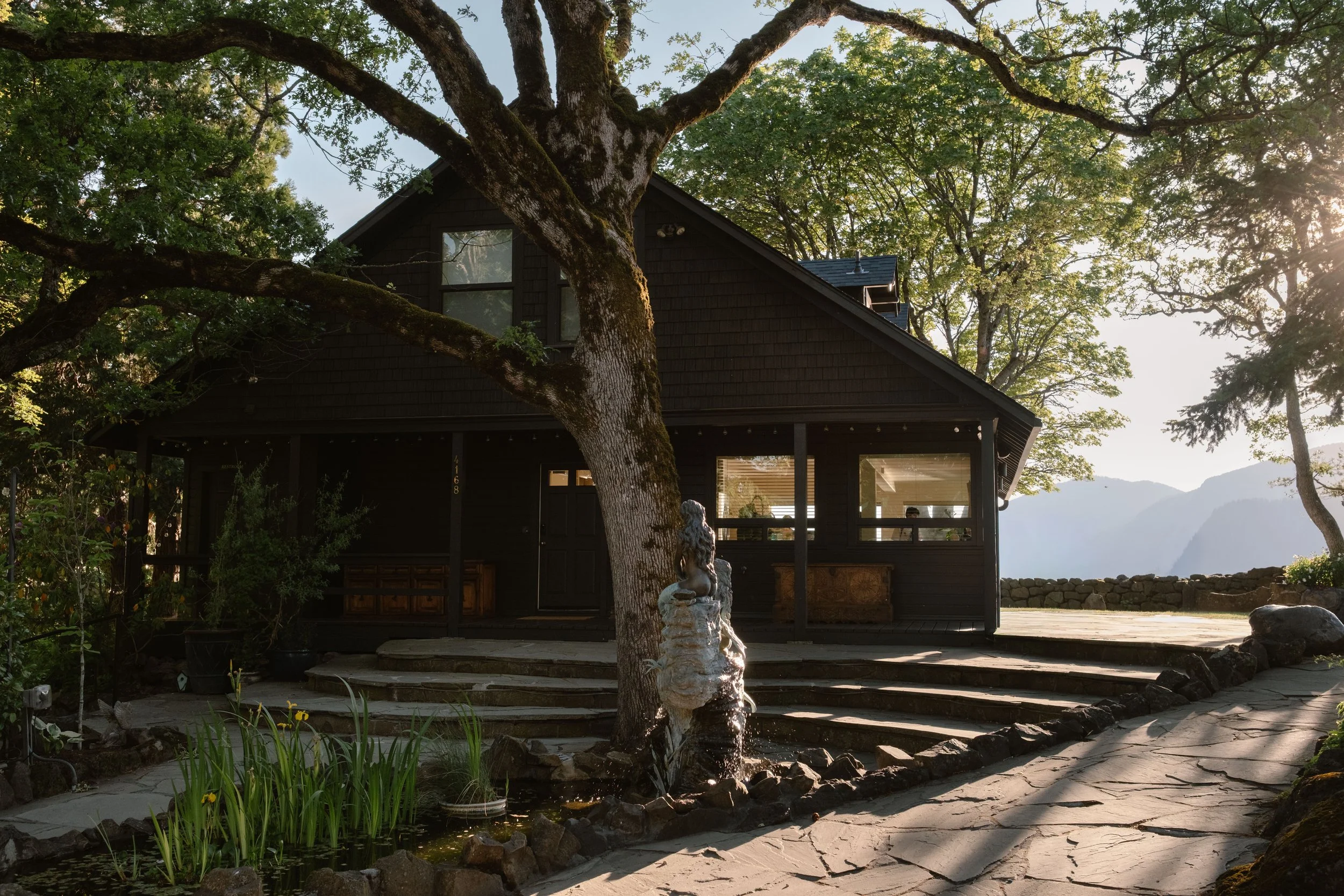
UNIQUE elopement AND MICRO wedding venues WITH TRADITIONAL AMENITIES
MOUNTAIN LODGES & HIGH ALPINE RETREATS
These venues are often tucked into forested areas or mountain towns, offering strong scenic presence without requiring full wilderness logistics.
They typically include:
Onsite lodging
Dedicated ceremony areas
Parking access
Indoor backup options
Established event infrastructure
They’re often well suited for guest counts in the 10–40 range, depending on layout. For couples who want proximity to alpine views without coordinating trailhead parking or permit limitations, lodges and retreat-style venues offer stability while keeping the atmosphere grounded in nature.
HISTORIC INNS & WATERFRONT PROPERTIES
Boutique inns and waterfront venues are common throughout the Pacific Northwest.
These spaces tend to be:
Smaller in scale
Character-driven rather than generic
Designed for intimate gatherings
Structured for ceremony and dinner in one location
They’re particularly strong for 10–30 guests and often allow for full-property buyouts, creating a cohesive, immersive experience without managing multiple locations.
DESTINATION RANCHES & PRIVATE ESTATES
Private properties designed specifically for events offer a different kind of flexibility… not your typical barn venue.
These venues usually provide:
Open-air ceremony spaces
Clear parking access
Restroom facilities
Rental coordination
Greater control over guest flow
For guest counts over 20, private estates can simplify coordination significantly while still maintaining a strong connection to landscape.
NATURE INTEGRATED VENUES & OUTDOOR AMPHITHEATERS
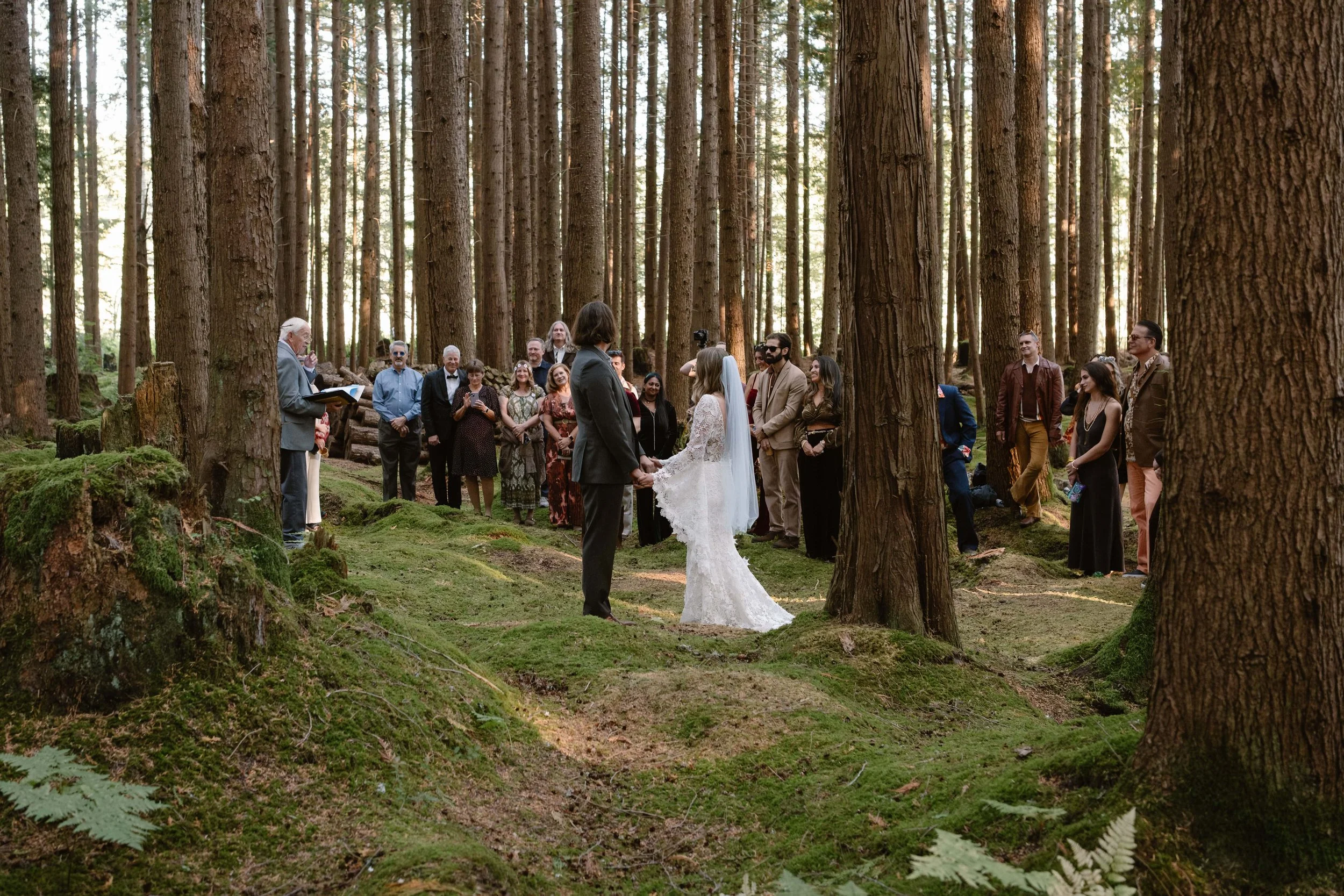
Some venues in the Pacific Northwest are intentionally built into the landscape. These are venues that feel like you’re on public land — forest clearings, open-air ceremony sites, amphitheater-style layouts — but are actually privately owned and permitted for events.
These spaces allow couples to:
Host guests outdoors
Stay within structured event guidelines
Avoid permit ambiguity
Maintain a smaller environmental footprint
They’re often ideal for couples who want an outdoor feel but recognize that managing a larger group on protected land can become complicated.
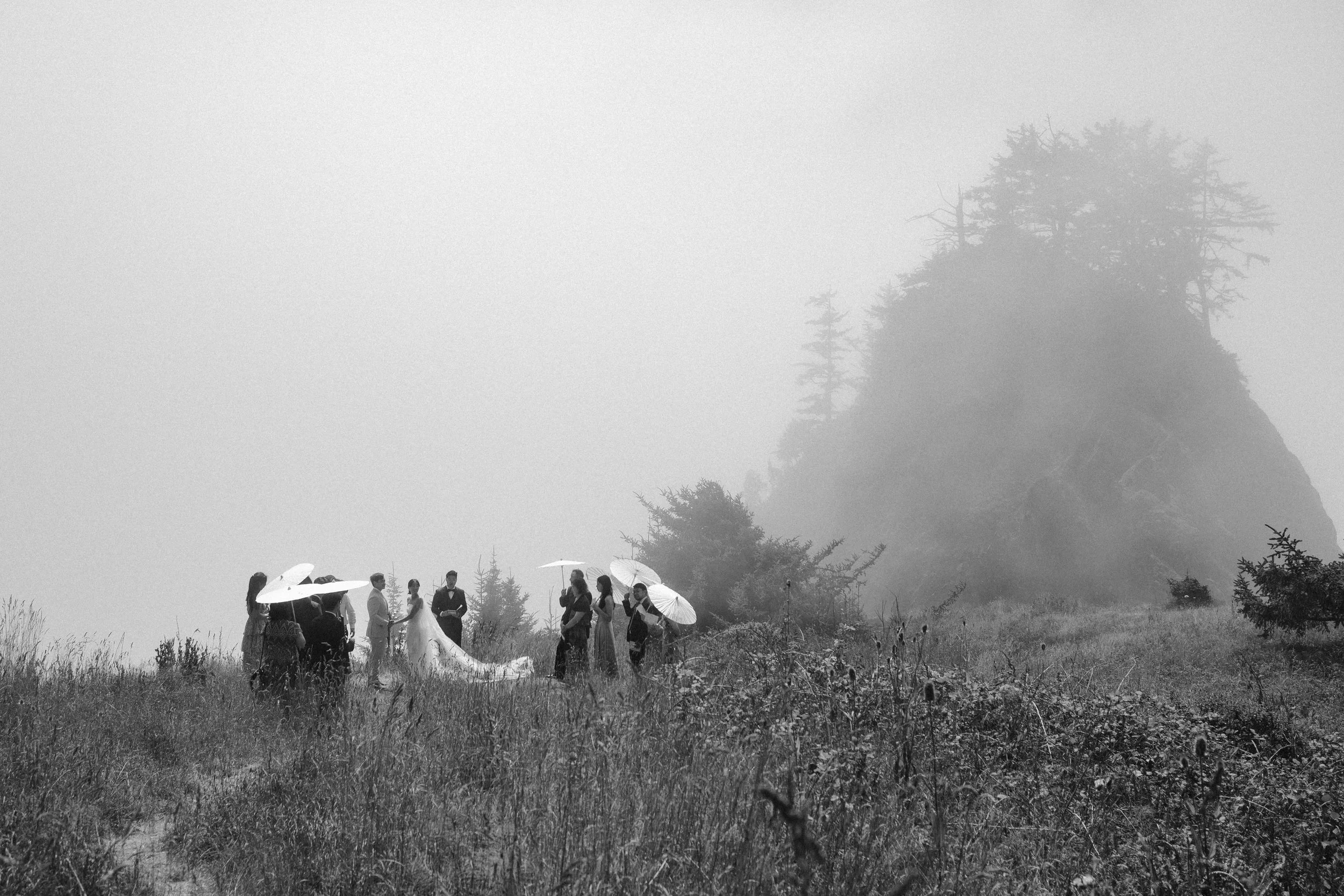
Creative & Non-Traditional Venue ideas (With Considerations)
Not every couple is drawn to established wedding venues, even when they feel more intimate and inspired by the landscape. In the Pacific Northwest especially, it’s common to consider options that feel more personal, more flexible, or less “wedding venue” in the traditional sense. These paths can absolutely work well for elopements and micro weddings. They just require a little more logistical planning.
VACATION HOME RENTALS
Vacation rentals can create an immersive weekend where everyone stays together and the celebration feels more like shared time than a formal event.
These spaces typically mean:
Flexible, multi-day access
Shared lodging for guests
Limited or conditional event permissions
Noise and occupancy restrictions
Not every rental allows gatherings, even if the house technically fits 20 people. Event clauses, insurance requirements, and local regulations vary widely. If you’re considering this route, confirm permissions directly with the owner or management company — in writing. Getting asked to leave mid-celebration isn’t a memory most couples want attached to their day. I wrote a guide on everything you need to know about planning an Airbnb wedding here.
RESTAURANTS & BREWERIES
For couples who care deeply about food and atmosphere, restaurants can be an excellent fit.
Many offer:
Private dining rooms
Partial or full buyouts
Built-in catering
Streamlined timelines
For guest counts under 30, hosting both ceremony and dinner in one location can remove a surprising amount of logistical stress. The key here is clarity around space capacity and timeline flow — especially if you plan to include a ceremony onsite.
EVENT STUDIOS & CREATIVE SPACES
Studio-style venues and event spaces — sometimes found through platforms like Peerspace — can offer unique architectural backdrops or urban settings.
They often work well for:
10–25 guests
Shorter, focused celebrations
Design-forward gatherings
However, it’s important to confirm that the space is approved for events, not just photoshoots. Terms can differ significantly, and capacity limits matter.
PERSONAL PROPERTY
Backyards, family farms, private cabins — these spaces can feel deeply meaningful. They’re also more logistically involved than most couples anticipate.
When hosting on personal property, you’ll typically need to coordinate:
Restroom solutions
Parking management
Rental equipment
Power access
Event insurance
With thoughtful planning, these spaces can become incredibly personal venues. But they function best when treated like a full event site — not just an open lawn.
GROUP CAMPSITES & RESERVABLE PARK SPACES
Designated group campsites, city parks, and certain state park areas can be reservable for small gatherings.
These spaces typically mean:
Shared public access
Designated ceremony areas
Basic restroom facilities
Limited parking
Noise and time restrictions
For smaller guest counts, they can work beautifully. Once you move beyond 15–20 guests, infrastructure becomes much more noticeable — parking tightens, restrooms matter, and the space has to hold both your group and regular visitors. In this region especially, these areas are heavily used and protected. Being realistic about impact helps ensure they remain available long term.
PUBLIC LAND (NATIONAL PARKS, FORESTS, & BLM LAND)
If you’ve been to enough weddings to know you don’t want one of those, public land is probably where your mind went first. You wanted to ditch the venue contracts, ballrooms, rigid timelines, and the opinions from everyone around you. You just want the day to be about you, and it should be.
Public land means:
No built-in restrooms
Limited or shared parking
Permit requirements
Strict group size caps
No guaranteed privacy
With a small group, this can work incredibly well. But once you move past 12–15 people, it stops feeling simple. Parking becomes tight. “Large” ceremony sites are limited. Rangers enforce restrictions. Other visitors are still there trying to enjoy the same place. Public lands come with a lot of boundaries and the bigger your guest list, the more those boundaries show up.
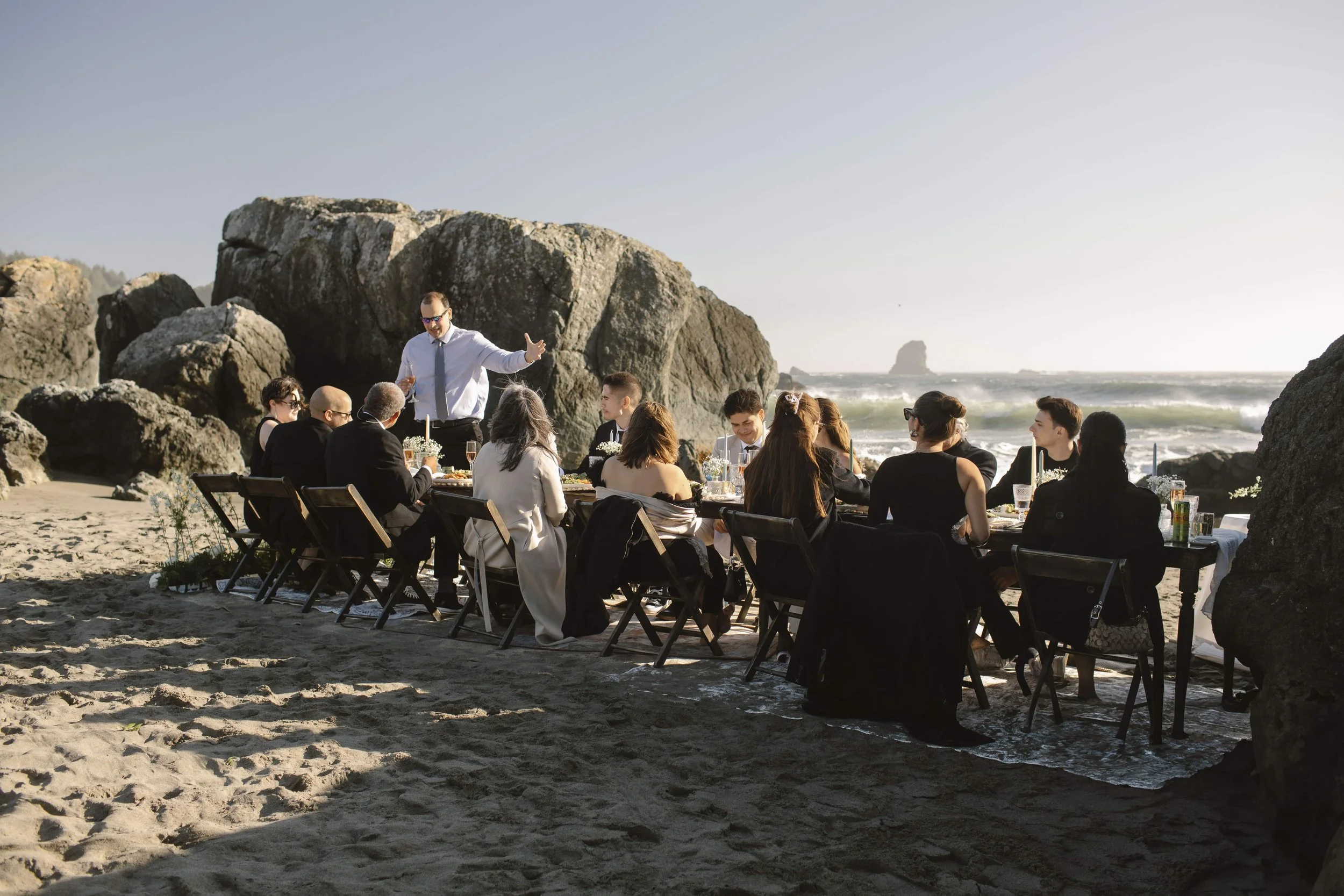
How Guest Count Impacts venue Choice in the Pacific Northwest
At first, most couples don’t realize five extra guests can completely change your options. There isn’t some arbitrary rule about what qualifies as an elopement. And more people doesn’t make your day less meaningful. However, this region has real limits.
Trailhead parking fills up. Alpine meadows can’t handle 25 chairs. National parks have permit caps. Some ceremony spots that feel perfect with eight people feel tight with eighteen.
So instead of asking, “Is this still an elopement?”, I encourage you to ask, “Can this location comfortably hold the number of people you care about?”. Because that’s the real problem we’re tying to solve.
The Reality of Planning with 2 Guests vs. 25 guests
WEDDINGS WITH 2-12 GUESTS
This is where you have the most freedom. With a smaller group, you can move easily. You can access more public land locations without overwhelming them. You’re less likely to run into parking issues or permit limitations. The footprint stays small — which matters here.
If you’re picturing a ceremony in a national park or on public land, this is often the range where it works beautifully.
Public land is still a strong option at this size.WEDDINGS WITH 12–18 GUESTS
This is where things start to get more nuanced. It’s still absolutely possible to host an outdoor ceremony. But the margin for error shrinks. You have to think about where everyone will park, how far they’re walking, whether there are restrooms nearby, whether the ceremony space can physically hold that many people.
Some locations can handle this comfortably. Others can’t — especially in peak season. This is often the point where couples start weighing whether a private property or venue might make the day feel more relaxed.
Public land is possible here — but increasingly conditional.WEDDINGS WITH 20+ GUESTS
Once you move beyond 20 guests, you’ve moved into event coordination territory. You’re now fully organizing multiple vehicles, arrival timing, seating, weather backup, accessibility for older guests, dinner logistics. In protected landscapes, that coordination can quickly become complicated.
This is where established venues and private properties start to make practical sense because they’re actually designed to support groups.
This is where venues begin to make practical sense.WEDDINGS WITH 25+ GUESTS
At 25 and above, public land is rarely the right setting. This many people creates real strain on parking areas, fragile terrain, and already crowded spaces. Most sites in the Pacific Northwest simply aren’t built to absorb gatherings at this scale. Even with permits, coordinating that many vehicles and bodies in a shared public space becomes stressful fast.
What feels “low key” on paper often turns into tight ceremony space, awkward crowding, and constant awareness of who’s watching. For this guest count, a venue isn’t about tradition… it’s about protecting the land and preventing your day from feeling chaotic.
At this size, a venue is almost always the better call.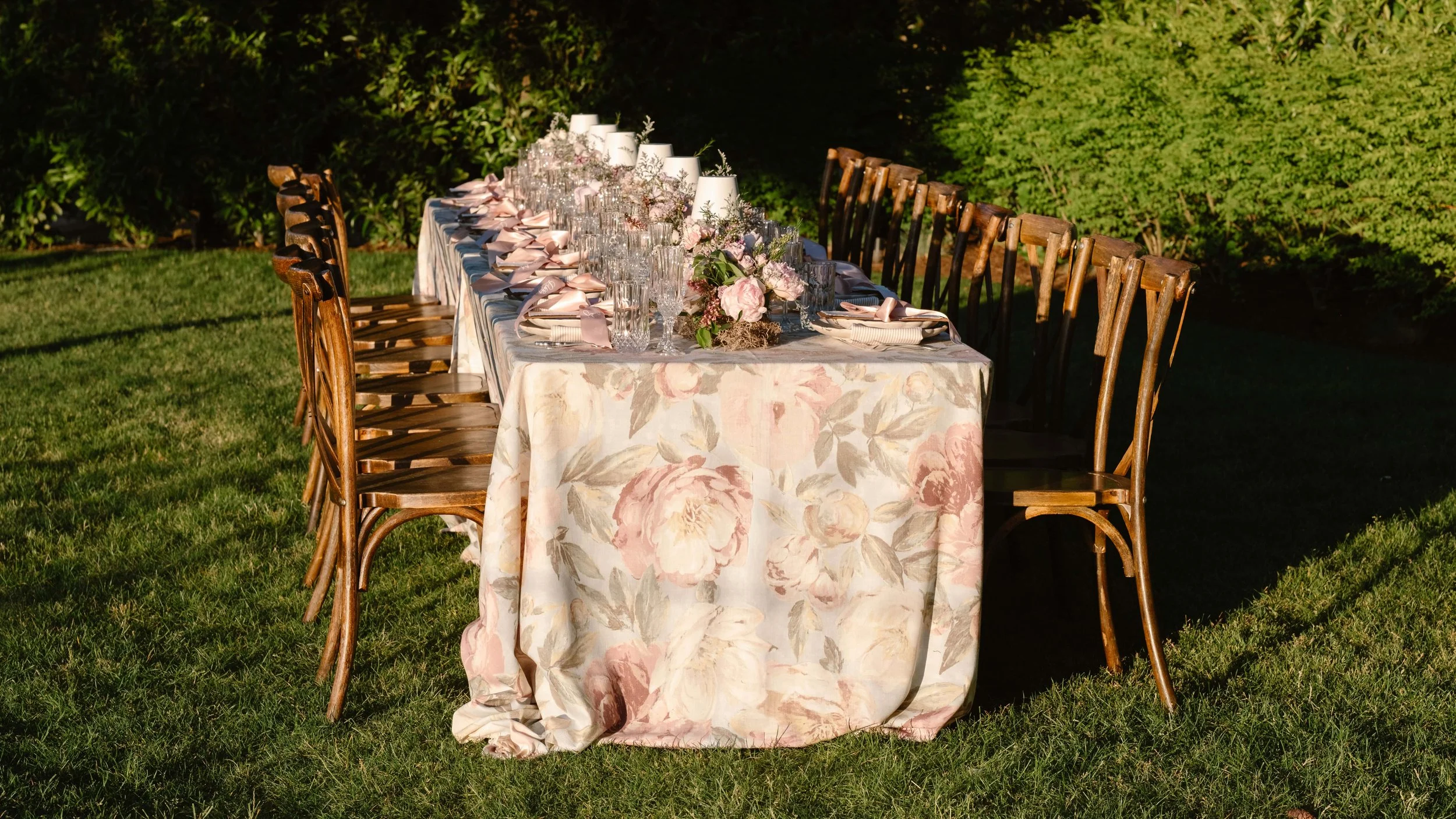
Choosing Between Public Land and a Venue: When Adventure Starts to Feel Like Hosting
By this point, you understand how guest count affects what’s possible. The decision has shifted from where you want to spend your wedding day to what role you want to have in it. With a very small group on public land, you’re free to move. The day can shift with weather, light, and energy. There’s room for spontaneity, and pivoting at a moment’s notice doesn’t feel overwhelming.
As your guest list grows, your role changes. You’re no longer just getting married — you’re hosting. Even at 15–20 people, someone needs direction. Someone needs clarity. The day begins to require structure. Your day can still feel wildly untraditional, yet will require coordination. The question becomes whether you want to manage that coordination in a shared public space with countless nuances — or step into a setting that’s already designed to hold it.
If you’re leaning toward a fully outdoor ceremony with a smaller group, I break down my top favorite locations across Washington and Oregon in my guide below:
What a Venue Actually Takes Off Your Plate
Established venues absorb a lot of responsibility.
They often include:
Staff for setup and teardown
A coordinator managing vendor flow
Getting-ready spaces and designated ceremony areas
Reliable restrooms and parking
Accessibility for guests with mobility needs
Tables, chairs, and sometimes catering infrastructure
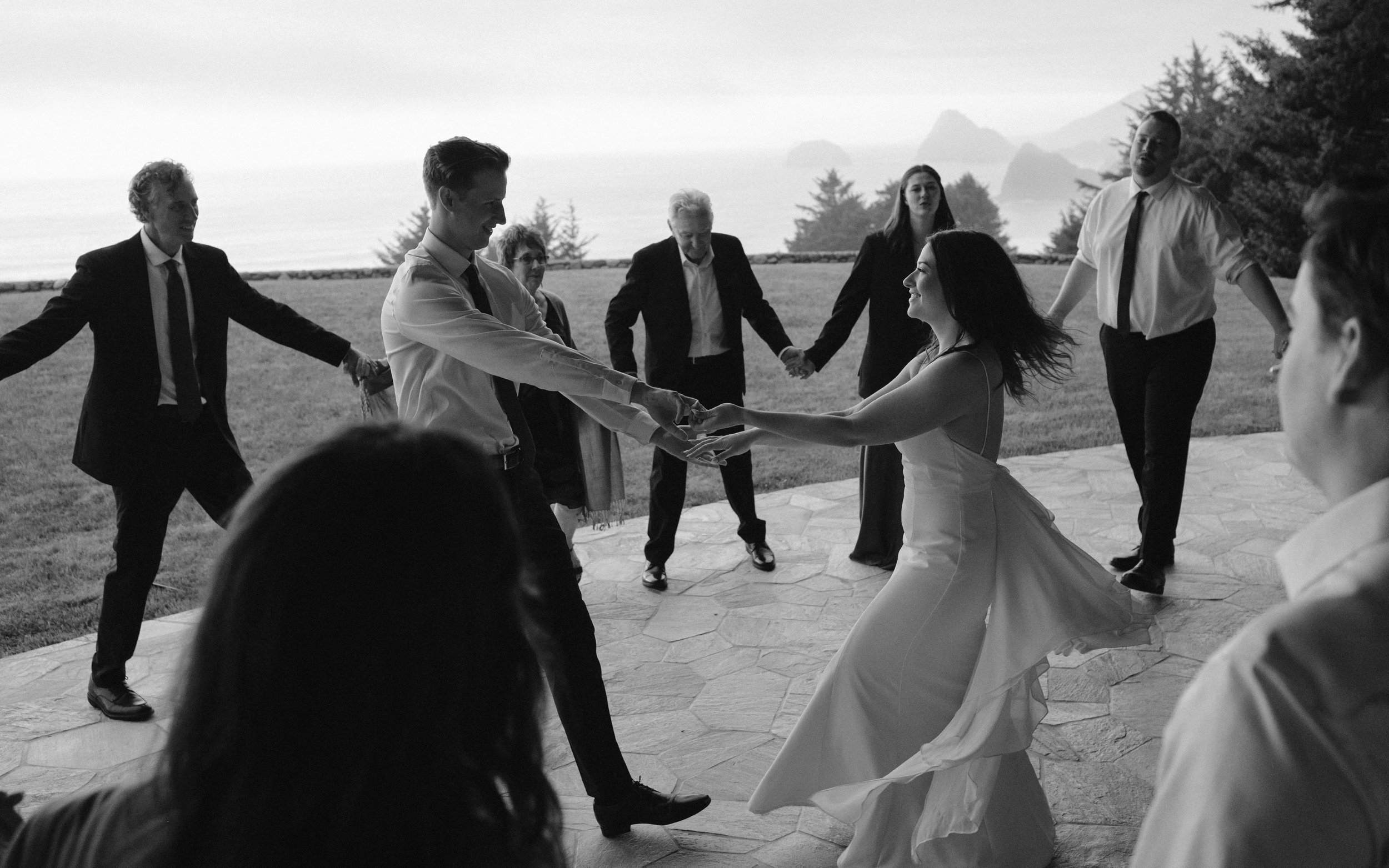
None of this is glamorous. But when you’re hosting 20+ people, it’s the difference between managing logistics and being present. When you’re present, you get to have a damn good day. When you’re managing logistics, you’re just managing. For smaller, intentional gatherings, many venues now offer packages designed specifically for micro weddings.
pacific northwest Wedding Venues by Region
Washington’s landscape shifts dramatically from alpine to coastal to island and your venue options shift with it. If you’re narrowing down where to focus, here’s how each region tends to function for elopements and micro weddings.
Washington wedding venues
Washington changes fast — one minute you’re in dry alpine air, the next you’re on a ferry with salt in your hair — and each region carries a completely different kind of weight.
LEAVENWORTH
Leavenworth feels like late summer light on pine needles, wood decks under your feet, and mountains close enough that you don’t have to hike for them — your guests can just look up.
→ Explore venues in this region here.
MOUNT RAINIER AREA
Around Rainier, the mountain just sits there — huge and quiet — and the right venue lets you hold that view without asking your grandparents to navigate a trailhead parking lot.
→ Explore venues in this region here. (coming soon)
NORTH CASCADES
The North Cascades feel raw and a little humbling — sharp ridgelines, deep valleys — and nearby venues give you a place to gather everyone without losing that edge.
→ Explore venues in this region here. (coming soon)
SAN JUAN ISLANDS
The San Juans feel like a slow arrival — ferry rides, docks, sea air — and waterfront venues turn the whole weekend into something that unfolds instead of rushes.
→ Explore venues in this region here. (coming soon)
OLYMPIC PENINSULA
Out on the Peninsula towards Olympic National Park, the forest is dense and the coast feels wild, and having a venue there means you can lean into the mood without worrying about the weather turning on you.
→ Explore venues in this region here. (coming soon)
Oregon Wedding Venues by Region
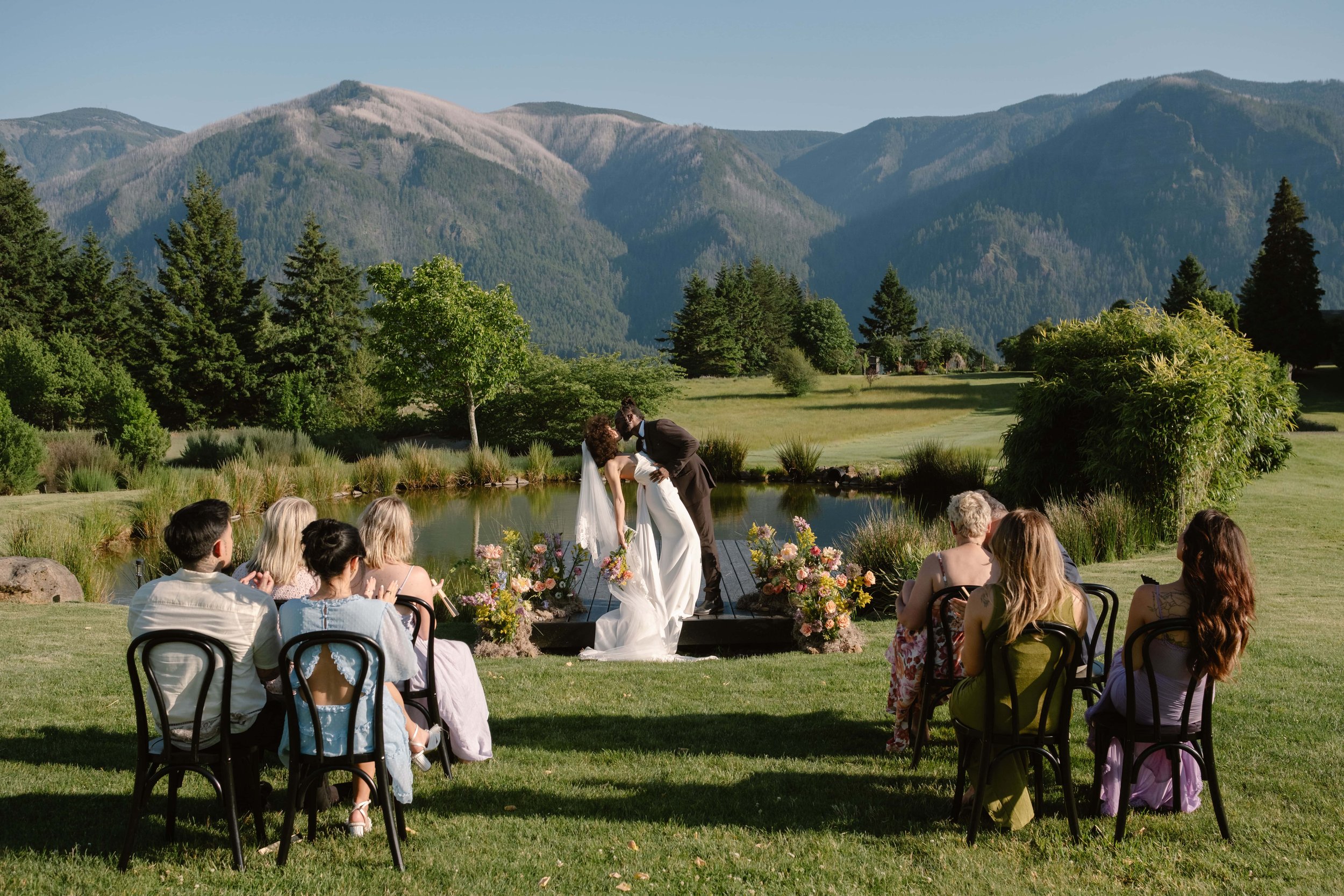
Oregon feels different than Washington. It’s more exposed, more wind, more sky — and the venues here tend to lean into that openness.
OREGON COAST
The Oregon Coast feels like standing on a cliff with wind in your hair and waves crashing below, and the right venue lets you hold that drama without asking your guests to balance on wet sand.
→ Explore venues in this region here.
COLUMBIA RIVER GORGE
The Gorge feels expansive and alive — the river moving fast, cliffs rising straight up — and venues here give you a grounded place to gather while that landscape does what it does behind you.
→ Explore venues in this region here. (coming soon)
CENTRAL OREGON
Central Oregon feels dry and golden and wide open, with juniper trees, volcanic rock, and big sky light that stretches late into the evening — and venues here let you host comfortably without fighting the elements.
→ Explore venues in this region here. (coming soon)
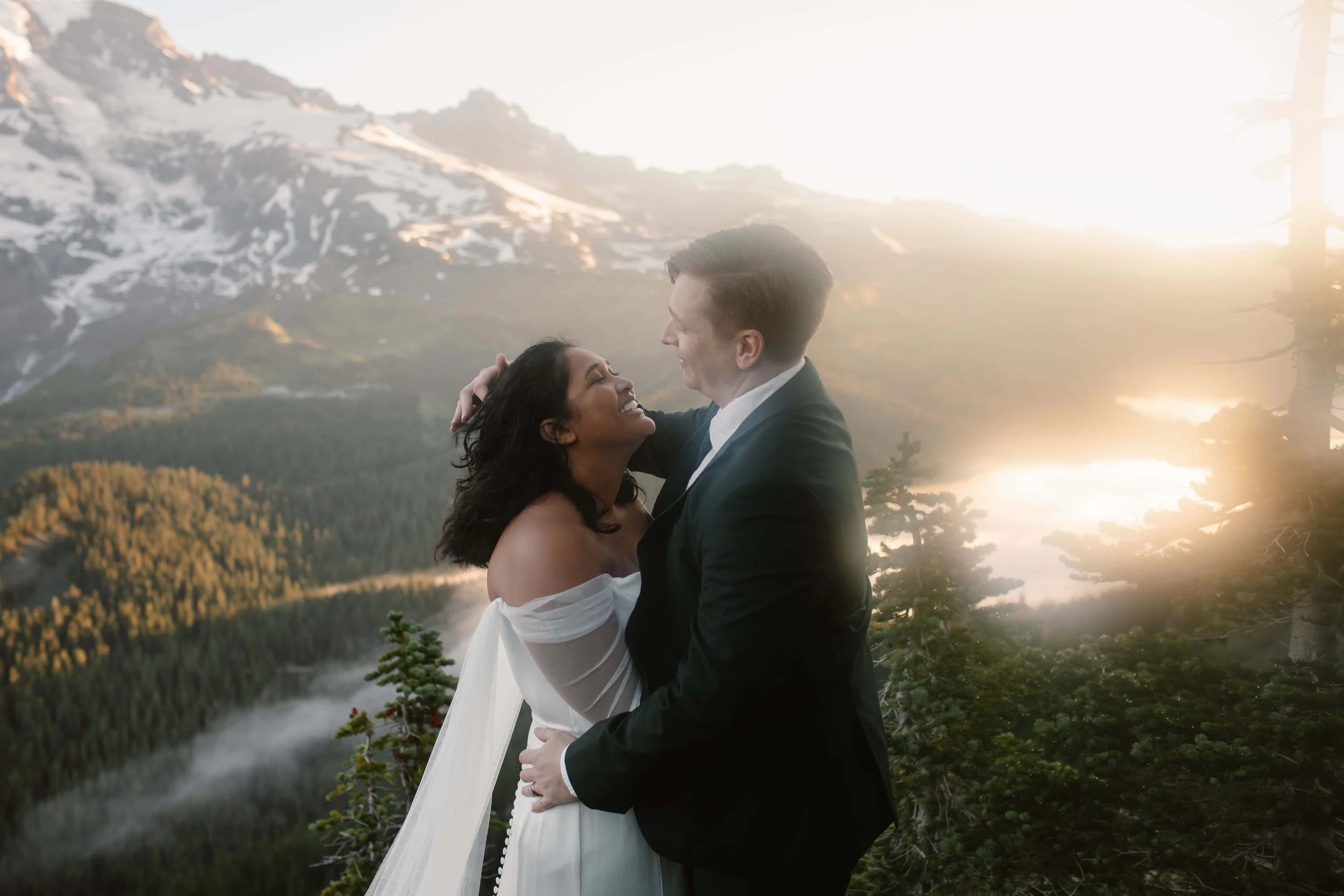
Choosing the Right Pacific Northwest Wedding Venue for Your Day
At some point, the decision usually becomes clear. It only gets complicated when you’re trying to make something work that doesn’t actually fit your guest count, your location, or the time of year.
If you’re planning a small, mobile group and feel comfortable with limited parking, uneven terrain, and a little unpredictability, public land can feel incredibly personal. If you’re picturing dinner, toasts, grandparents, and a full evening together, having a venue underneath that experience simply makes it easier to manage.
The Pacific Northwest changes quickly. Weather shifts. Trailheads fill. Fire season reroutes plans. When you’re gathering people here, practicality matters.
When your guest list, location, and logistics are aligned, the day runs smoother — and you’re not stuck troubleshooting while trying to be present.
If you’re still sorting through what makes the most sense, that’s normal. The right setting is the one that supports your people and the kind of experience you actually want to have.
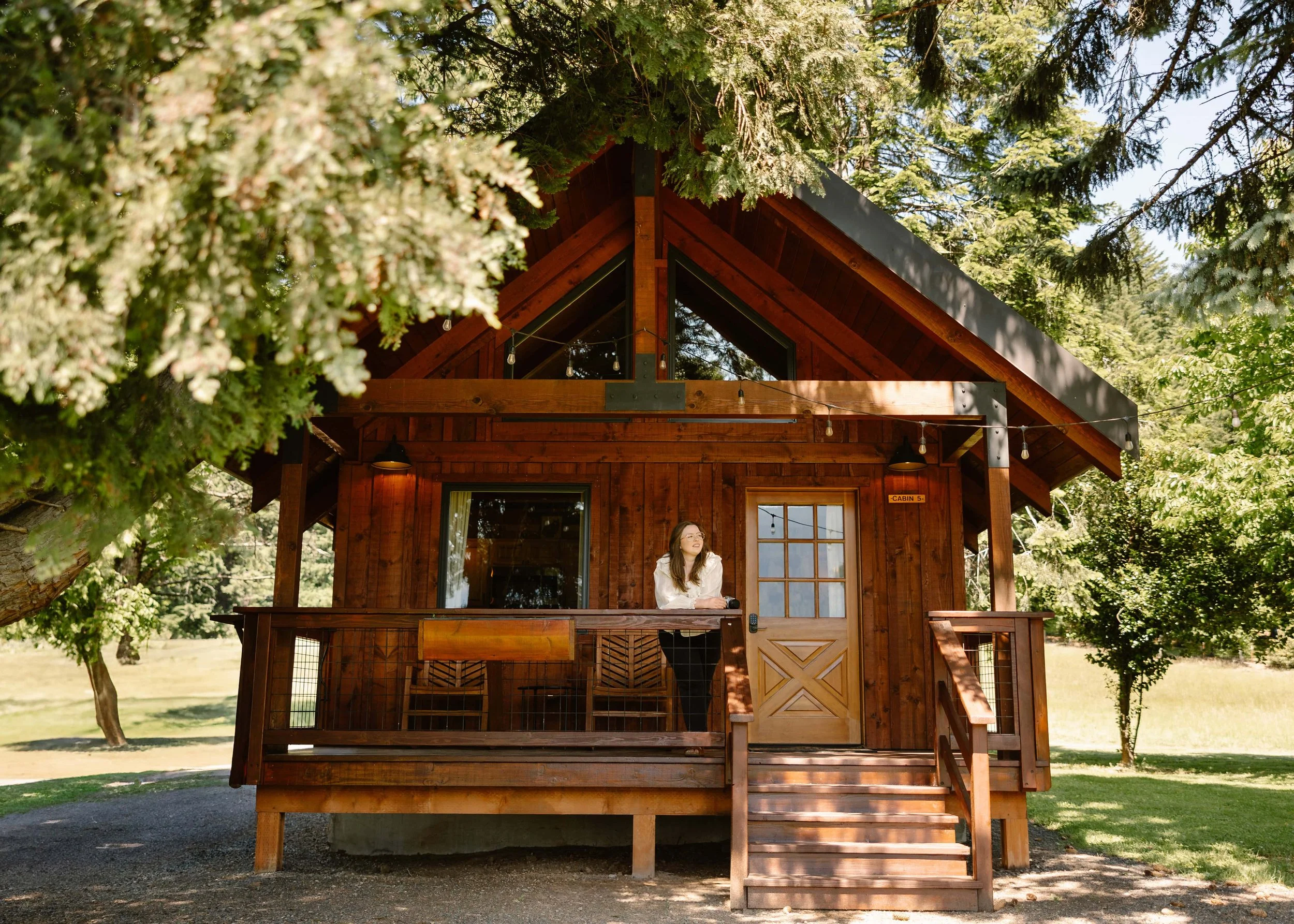
Hey, I’m Heather!
I DIDN’T HAVE A TRADITIONAL WEDDING EITHER
My husband and I said our vows on the side of a volcano — just the two of us — and then met our families on the coast for a ceremony by the water. We flew everyone in, turned it into a week-long gathering, and ended the whole thing around long tables and clinking glasses.
Highly unconventional and entirely intimate. We built structure around the parts that mattered so the experience never felt chaotic.
That’s the kind of day I help couples create now — adventure-driven, guest-conscious, and designed so you’re actually present for it. If you’re sorting through what setting makes sense for your version of a damn good day, I’d love to hear what you’re planning.
If you’re planning an elopement or micro wedding in the Pacific Northwest and want it to feel intentional from start to finish…

An Airbnb elopement offers space for slow mornings, shared meals, and meaningful time together. It can also come with logistical layers couples don’t always see at first. This guide explores what makes it work beautifully — and what to consider before you book.